
Fall Back Flex is a temporary connection scheme for businesses in areas where we expect the electricity grid to come under strain. This scheme allows you to connect or increase your capacity, whilst Fluvius ensures the grid remains safe during periods of peak demand. On this page, ‘Grid Congestion Figures and Maps’, you can see the connection options for high and very high power ratings in your region.
Have you received a quote from us for a Fall-Back Flex connection for your business? Below, we explain what it is and help you understand your quote.
Quick insight
- Fall-Back Flex is a temporary connection scheme for areas where the grid is expected to come under strain in the future.
- As a business, you will have access to the requested power; Fluvius may ask you to temporarily limit that power in order to protect the grid.
- A number of conditions apply to a quote offering Fall-Back Flex.
Find out the terms and conditions in this video
Would you like to quickly understand what a proposal involving Fall-Back Flex means for your application?
In this video, we take a closer look at the steps we’ll go through with you.
Missed Part 1
Read on for the step-by-step guide to your case.
Why is Fall-Back Flex needed?
As a result of the energy transition, businesses’ electricity consumption is rising sharply. We are investing heavily in the electricity grid, but these works take time. In the meantime, Fall-Back Flex offers a solution that enables:
- businesses to connect to the grid or obtain additional capacity;
- we can protect the electricity grid at times of overload;
- the energy transition – the shift from fossil fuels to electricity – is not delayed.
Without this scheme, businesses in areas where grid congestion is expected would have to wait for a connection until the necessary investments in the grid have been made.
What does Fall-back Flex mean for your business?
Under normal circumstances, you can use the requested capacity. Only at times when grid security is under pressure may we ask you to temporarily restrict your capacity. We always do this in accordance with pre-agreed arrangements. Once the necessary grid investments have been made to resolve the expected grid congestion in your region, the agreement will lapse.
How you temporarily limit your capacity is up to you and will depend on your specific business situation. Your account manager will discuss with you the options available to you for managing this.
What does a proposal involving Fall-Back Flex consist of?
As soon as you have submitted an application, our technical department will get to work. If we determine that grid congestion is expected in your region, you will automatically receive a proposal including Fall-Back Flex. This means that your quote will be subject to a number of additional conditions regarding connection to the grid or the provision of the additional power requested. You can find more information about Fall-Back Flex in the product information sheet.
Once the preparatory work is complete, we will go through a few steps and documents with you before we can process your application.
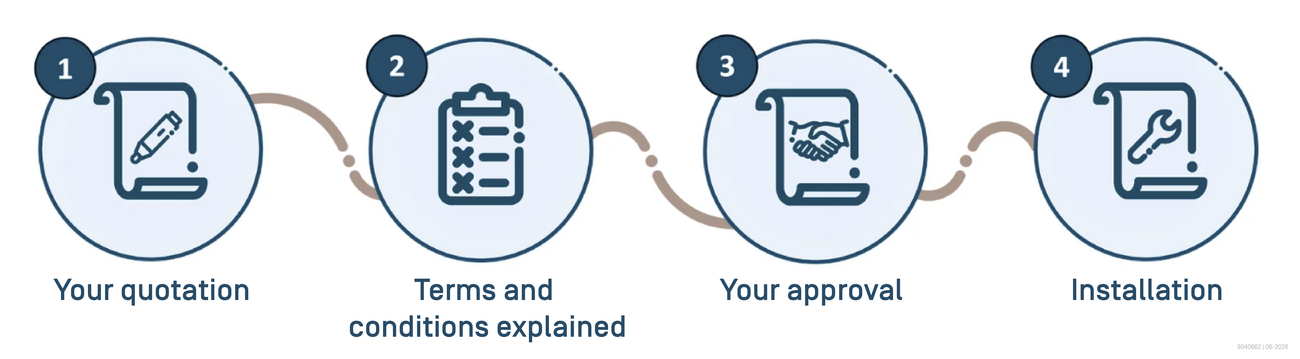
Find out what each step means for you:
-
1
Quotation, including terms and conditions and project brief
Once the assessment has been completed, we will send you a quotation setting out the terms and conditions for flexibility. You will have the opportunity to discuss the proposal with your account manager.
The assessment document provides clarity on:
- the network assessment carried out;
- the conditions under which your connection is possible;
- the period during which Fall-Back Flex applies.
It provides legal and technical clarity regarding your situation.
-
2
Explanation of flexibility terms and conditions
Product information sheet
The product information sheet Fall Back Flex explains how this flexibility product works, the conditions under which companies can participate, and how the collaboration is organised from both a contractual and technical perspective.
Area fact sheet
The Area fact sheet describes where the grid constraint is located, why Fall-Back Flex is required in your zone, and sets out a number of agreed terms between you and Fluvius. These include the flexible capacity [MVA] and regulation volume [MVAh] required of you, and the period for which we are requesting flexibility. As a guide, we also provide a forecast of the flexibility required for the coming years.
Bid form
Via the Bid form,you confirm your commitment to settlement. This is a standardised document designed to offer Fluvius flexibility. To ensure this is done within the existing regulatory framework, the process is carried out via a market procedure. You do not need to do anything yourself; we will take the necessary administrative steps and confirm when your bid has been accepted.
Agreement with the person responsible for maintaining balance
When your flexible installations are controlled, this affects the grid balance. Your balance responsible party plays a key role in monitoring this balance, which may have financial implications. Check with your energy supplier to find out who this is in your case and make arrangements with them. This ensures it is clear who bears financial responsibility in the event of Fall-Back Flex control.
-
3
Your approval
Please provide us with:
- the signed application form;
- the signed quotation;
- approval from your balance manager?
We will then send you the connection contract and can begin preparing your application.
-
4
Connection and installation
For new connections to the medium-voltage grid, the process largely follows the standard procedure. You can find more information on this in our high-power connection guide. To enable load balancing in the event of congestion, we supply a Netflex box. Your installer will install it in your electrical cabinet and connect it to your customer interface.
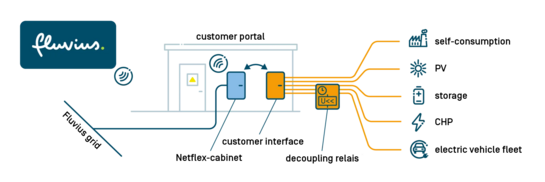
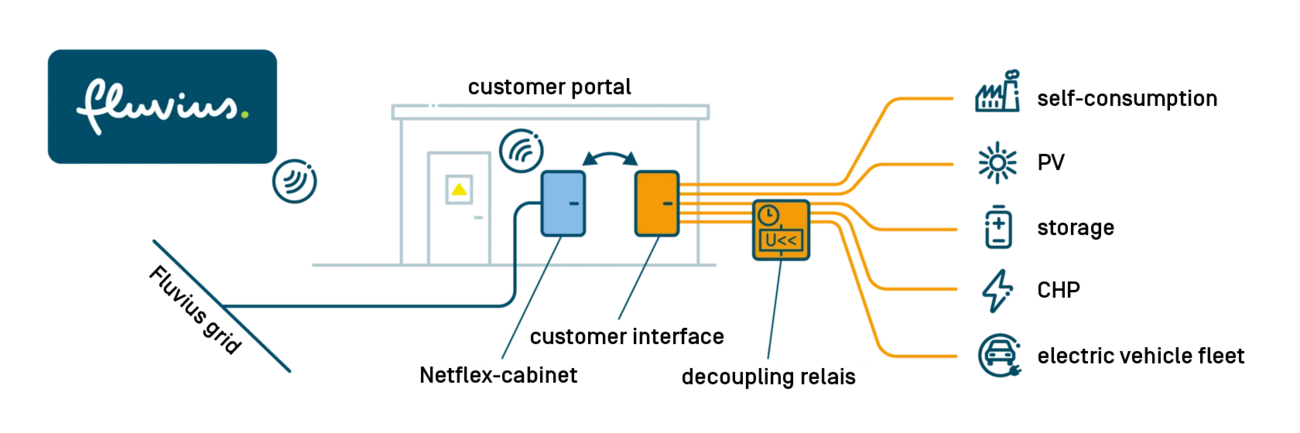
In this final video, we’ll take a closer look at a few key points to bear in mind during installation (Step 4) and explain how the system is adjusted in the event of grid congestion.
Frequently Asked Questions
What is a high- or very high-power connection?
A high- or very high-power connection is typically a medium-voltage electricity connection of 100 kVA or more, intended for businesses that require a lot of power.
Is a Fall-Back Flex connection compulsory for every business? Can I refuse a proposal that includes Fall-Back Flex?
We only apply flexibility where it is genuinely necessary and always assess each case individually. As a business, you may refuse a Fall-Back Flex connection, but this means that we may have to postpone your connection or an upgrade to your connection until the necessary grid investments have been made to resolve the expected grid congestion in your region.
Is Fall-Back Flex the same as a flexible connection agreement (FAO)?
No. Fall Back Flex is a temporary solution that Fluvius uses to connect you in areas where grid congestion is expected. A flexible connection agreement (FAO) is a more permanent form of contract that Flanders is currently developing for the longer term. A Fall Back Flex agreement will then be automatically converted into an FAO.
Is Fall-Back Flex final?
No. Fall Back Flex is a temporary solution. As soon as the regulatory framework for flexible connection agreements (FAO) has been finalised, your connection will automatically be switched to this type of contract.
In addition, there may also be investment in the capacity of the electricity grid in your region. In that case, we will work with you to consider switching to a fixed or flexible connection, depending on what is most suitable at that time.
Geen antwoord gevonden op je vraag? Stel dan je vraag via ons contactformulier.